THIS IS NORESCA
Senaste inlägg

NetSuite implementation in the Nordics: how VISIT scaled its ERP across multiple countries
VISIT went from a NetSuite implementation in Sweden to a full ERP rollout across the Nordics. CFO Ken Østreng on multi-entity, data readiness and choosing a Nordic partner.

When Is NetSuite the Right ERP System – and When Is It Not?
Changing an ERP system is rarely [...]

Noresca establishes operations in Norway – continues its Nordic expansion
Noresca establishes operations in Norway and [...]
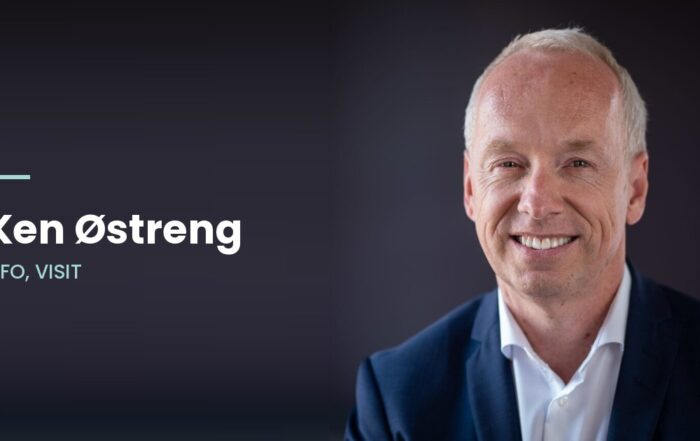
NetSuite implementation in the Nordics: how VISIT scaled its ERP across multiple countries
VISIT went from a NetSuite implementation in Sweden to a full ERP rollout across the Nordics. CFO Ken Østreng on multi-entity, data readiness and choosing a Nordic partner.

When Is NetSuite the Right ERP System – and When Is It Not?
Changing an ERP system is rarely [...]

Noresca establishes operations in Norway – continues its Nordic expansion
Noresca establishes operations in Norway and [...]

2025-09-11
Change management – the road to a successful ERP project
Changing an ERP system is one of the biggest changes a company can make. At the same time, research shows that up to 70% of all change projects fail to meet their objectives. When it comes to ERP projects, the risk is particularly high – more than half are delayed, over budget or deliver less benefit than planned.
At Noresca, we see the same pattern in practice: technology is rarely the problem. What determines whether an ERP change is a success or a failure is how well the organization is led through the change.
A new system can be set up right from day one. But without buy-in, a clear vision and an organization ready to work in new ways, it won’t work.
Why change management is crucial
The difference between the companies that succeed and those that get stuck is rarely in the system’s features – but in how well the change journey is managed. When a company moves from local solutions to a global ERP like NetSuite, it often means:
New processes that change the daily life of finance and accounting teams.
New roles and responsibilities that need to be clearly defined.
New ways of working that require training and support – both before and after go-live.
Here’s what you need to have in place before switching ERP
When so many change projects fail, it is important to create the right conditions even before the implementation starts. The companies that succeed have one thing in common: they have done the groundwork and built a solid foundation for the change.
Here are the main factors:
Clear ownership – Decide early on who is responsible for the data model, chart of accounts and reporting package.
A shared vision – What will the ERP change achieve? Faster financial statements, better consolidation, global scalability?
Resources and mandate – Ensure that key people have time dedicated to the project and a mandate to make decisions.
Data quality – Clean and structure the master data even before the project starts.
Minimum Lovable Scope – Start with a core that works. Build on go-live instead of trying to solve everything at once.
Dry simulations – Run full flows in test environment before go-live: order-to-cash, purchase-to-pay, financial statements.
Change management – Planning how to prepare, train and support the organization in new ways of working.
A proven framework for change management in ERP projects
Successful ERP projects require a structured approach. It is not enough to configure the system correctly – the organization must also change the way it works. This is where we often see the difference between the companies that succeed and those that get stuck.
One of the most proven change management frameworks is the Kotter 8-step model. Companies that actively work with these principles are much more likely to get value from their new ERP – while those that don’t often struggle with low adoption, late delivery and lack of impact.
The steps can be applied directly to ERP projects:
Create a sense of urgency
– Show why the old system is not enough: late financial statements, manual handling, lack of scalability.Build a strong steering group
– Put together a cross-functional project team with representatives from management, finance and operations.Develop a clear vision
– Formulate what the ERP change should achieve: faster reporting, fewer manual steps, global scalability.Communicate the vision widely
– Anchor the project with the whole organization. Everyone must understand why the change is happening.Empower employees to act
– Remove barriers, listen to concerns and ensure proper training.Create short-term gains
– Highlight early improvements, such as automated reconciliations or simpler reports.Consolidate and build on
– Develop in waves. Improve after go-live with more processes, more countries and more analysis.Embed the change in the culture
– Make the new ERP system a natural part of everyday life and management – not a side project.
Our tips for a successful ERP switch
Make the ERP changeover a business project with a clear link to strategic objectives.
Anchor the change in management and communicate widely in the organization.
Set a vision and measurable impact targets from the start.
Engage key users early and create internal ambassadors.
Plan for training and support, both during the project and after go-live.
Dare to let go of old ways of working – an ERP change is a chance to build right from the start.
Executive summary
At Noresca, we know that success in ERP projects is about more than technology. Even if we do not lead the entire change journey with our customers, we are always there as a sounding board for a system change and contribute with our experience from similar projects.
Once the implementation starts, we work with a proven project methodology where change management is an integral part – from goal setting and anchoring to training and support after go-live.
Want to know more about how we work on ERP projects and how change management is woven into our approach? Read more about it here or Contact us – we are happy to share our insights and experiences.