
THIS IS NORESCA
Senaste inlägg
NetSuite implementation in the Nordics: how VISIT scaled its ERP across multiple countries
VISIT went from a NetSuite implementation in Sweden to a full ERP rollout across the Nordics. CFO Ken Østreng on multi-entity, data readiness and choosing a Nordic partner.

When Is NetSuite the Right ERP System – and When Is It Not?
Changing an ERP system is rarely [...]
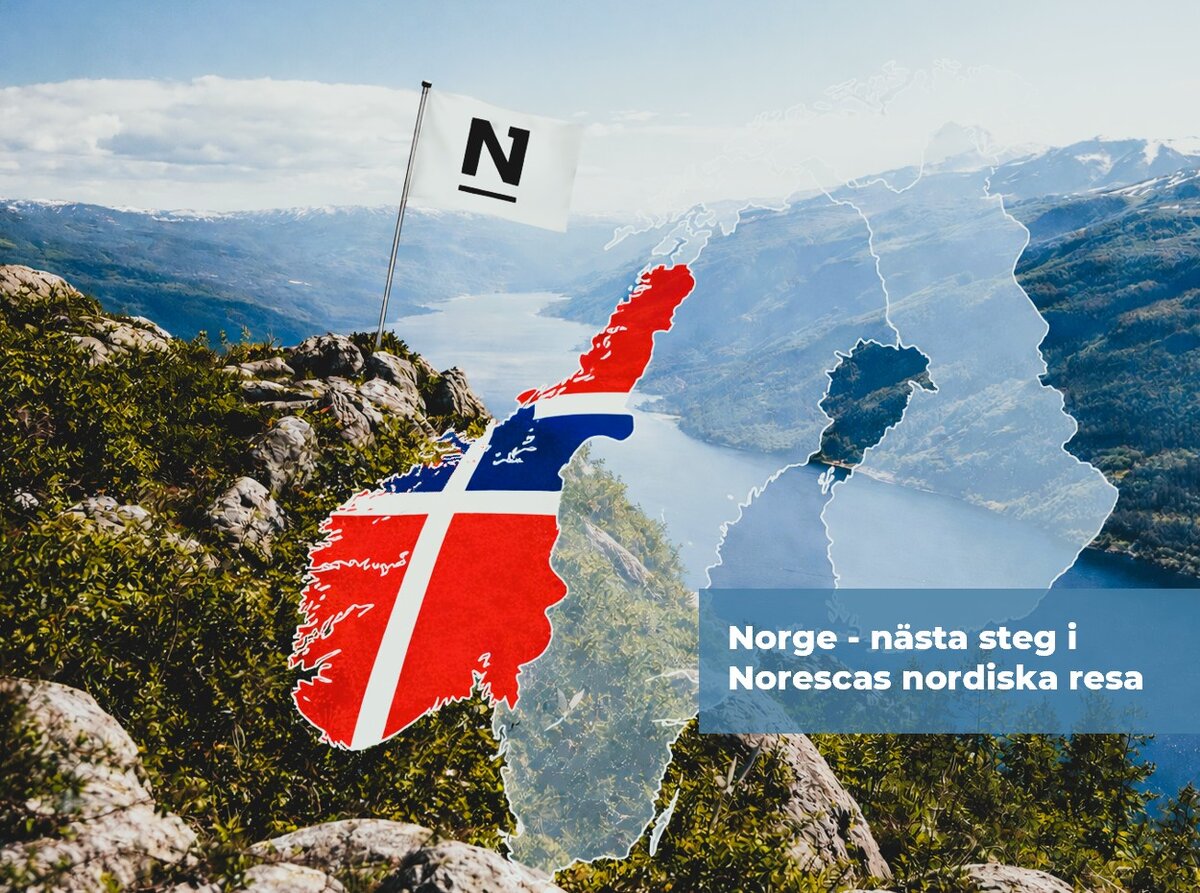
Noresca establishes operations in Norway – continues its Nordic expansion
Noresca establishes operations in Norway and [...]
NetSuite implementation in the Nordics: how VISIT scaled its ERP across multiple countries
VISIT went from a NetSuite implementation in Sweden to a full ERP rollout across the Nordics. CFO Ken Østreng on multi-entity, data readiness and choosing a Nordic partner.

When Is NetSuite the Right ERP System – and When Is It Not?
Changing an ERP system is rarely [...]
Noresca establishes operations in Norway – continues its Nordic expansion
Noresca establishes operations in Norway and [...]
2026-09-01
NetSuite implementation in the Nordics: how VISIT scaled its ERP across multiple countries
Growing SaaS companies quickly reach the point where fragmented finance systems and spreadsheets no longer keep up.
Group reporting slows down, data integrity erodes with every acquisition, and the finance team spends more time reconciling than analysing.
That is where a NetSuite implementation in the Nordics comes in — but not as a purely technical decision. Fast-growing SaaS companies operating in several countries need a platform that handles group reporting, local regulation and continued international expansion.
VISIT was founded in Gothenburg in 1999 and today has 400 employees across eight countries and more than 10,000 customers in over 150 countries. That scale cannot be run on fragmented finance systems. Here they describe how they went from an implementation in Sweden to a full ERP rollout across the Nordics — and why choosing the right Nordic NetSuite partner proved decisive.
On this page
Why do fast-growing SaaS companies need a scalable ERP system?
VISIT is a private equity-owned travel tech company providing software solutions to the hospitality industry. The company has grown from a Swedish core business into a Nordic and European player — both organically and through strategic acquisitions.
With new owners and greater international ambitions came the need for a common, scalable finance platform. The choice fell on NetSuite — a system the owners already knew well from other SaaS companies.

“Our owners are an international private equity firm that also sees NetSuite as a proven solution for SaaS companies. That gave us a solid basis for the decision.”
Ken Østreng, CFO, VISIT
Read more about our NetSuite implementation for SaaS companies
What did VISIT learn from the first phase in Sweden?
The collaboration with Noresca started with a NetSuite implementation in the Swedish part of the group. For VISIT this became an important learning phase. Implementing a new ERP system is not only about technology — it also requires the organisation to review how it works, its processes and its data quality.
“NetSuite was new to all of us at Visit Group. We learned a great deal in phase 1 that we are taking with us into phase 2,” says Ken Østreng. “When you move into a new ERP system you have to think through how you work and adapt your processes. We can clearly see the benefit of that now.”
One of the key insights concerned identifying risk in critical processes.
“Mapping out what you are afraid will go wrong is incredibly important. The simple things are easy to solve along the way. But where large volumes are involved — anything touching customers and invoicing — you cannot afford to fail. On day one after go-live we sent 1,000 invoices correctly to customers. We are proud of that.”
Ken Østreng, CFO, VISIT
How do you manage a multi-entity ERP rollout across the Nordics?
With the experience from Sweden, VISIT moved on to the next phase: a broader ERP rollout across the Nordics, including VisBook and the operations in Norway, Sweden and Denmark.
Rolling out an ERP system across countries adds complexity, particularly around multi-entity structures, local accounting rules and tax requirements, integrations between underlying systems, and data migration and invoicing flows with high transaction volumes. For SaaS companies, data quality and data readiness are often the biggest risk — not the technology itself.
Despite the added complexity, VISIT chose to run several critical deliveries in parallel. “Going live with systems at the same time is demanding,” says Ken Østreng. “But it was a choice we made, and once the processes start working every day gets a little easier. We have definitely outgrown the old solution.”
How we run multi-entity ERP projects across the Nordics
What are the most common challenges in a NetSuite implementation?
One of the biggest challenges in the project concerned invoicing flows and handling large volumes of data. Data from underlying systems had to be integrated and transferred correctly into NetSuite, while solutions for bank reconciliation and payment approval were implemented at the same time.
Typical challenges in an ERP implementation for SaaS companies
- Data quality and data readiness
- System integrations with underlying platforms
- Automation of financial processes
- Handling high transaction volumes
- Local accounting and tax requirements in each country
Through close collaboration and the right structure, these challenges were handled efficiently without disrupting the business.
Why does a local Nordic NetSuite partner matter?
For companies operating in several Nordic countries, local understanding is decisive. Differences in regulation, reporting requirements and tax mean that a partner with regional expertise reduces risk and makes the implementation run more smoothly.
“Noresca has been with us since we first started looking at this. You know us as a customer, you know our business well. We have also learned to work well together. We find Noresca very responsive and proactive — and that matters when we roll out in new countries.”
Ken Østreng, CFO, VISIT
He describes the differences between countries as manageable: “Every new country has its own small differences. But our experience is that we have solved every challenge that has come up so far fairly smoothly. We feel very confident with Noresca as our implementation partner in the Nordics.”
Read more about our Nordic presence and delivery capacity
Results of the NetSuite implementation: what did VISIT achieve?
The biggest gain from the NetSuite implementation is the whole picture. By bringing the entire group onto one ERP system, VISIT has achieved:
- A common group chart of accounts
- Improved financial reporting
- Greater transparency and control
- A platform that supports continued international growth
“We had different finance systems in different parts of the business. Simply consolidating everything onto one platform with a common group chart of accounts is very positive for us,” says Ken Østreng. “We can easily map the local chart of accounts to the group chart of accounts. That gives a completely different level of scalability and visibility in the numbers — and makes it easy to bring in new companies and new countries.”
Advice for CFOs planning an ERP implementation
Ken Østreng has experience of several major ERP systems, including SAP, Dynamics and Unit4. His advice to other CFOs facing a similar journey is clear:
“I would absolutely recommend that other CFOs in the Nordics considering a NetSuite implementation include Noresca in their evaluation. Our experience has been very positive.”
Ken Østreng, CFO, VISIT
He also highlights the importance of internal preparation: “The most demanding part for us has been being ready on our side. There are processes that have to be thought through internally to achieve data readiness. But it is also a good opportunity to discuss how you want to work going forward — rather than getting stuck in how things have always been done.”
About VISIT
- Founded in Gothenburg in 1999 — out of the ambition to solve the problems the founders themselves faced in the travel and hospitality industry
- The industry’s leading SaaS company in Central and Northern Europe
- A complete ecosystem of business-critical systems for hotels, short-term rentals and experiences
- 400 employees across eight countries
- More than 10,000 customers in over 150 countries
- Private equity-owned. The ERP rollout covers the companies in Norway, Sweden and Denmark, including VisBook
Frequently asked questions about NetSuite implementation in the Nordics
How long does a NetSuite implementation take?
For a smaller SaaS company with a single legal entity, a typical implementation runs 3–5 months from kickoff to go-live. For multi-entity setups across several Nordic countries, like VISIT, it is normally 6–9 months per phase. Data quality and internal readiness affect the timeline more than the technology does.
What does a NetSuite implementation cost in the Nordics?
The cost splits in two: licence (an annual subscription based on the number of users and modules) and the implementation project. An implementation for a mid-sized company typically lands between EUR 55,000 and EUR 225,000 depending on the number of entities, integrations and data volume. Multi-entity projects across several Nordic countries normally sit in the upper part of that range.
What are the most common challenges in an ERP rollout across several Nordic countries?
Three things recur: local accounting rules (VAT and tax in particular), integrations with underlying systems carrying high transaction volumes, and data migration where source data quality is often worse than the organisation believes. VISIT points to the invoicing flow as the most critical thing to get right from day one — there was no margin for error there.
Do we need a local NetSuite partner in the Nordics?
Yes, if the business has legal entities in several Nordic countries. Differences in accounting rules, VAT reporting and local requirements (SAF-T in Norway, e-invoicing in Denmark, K2/K3 in Sweden) mean that a partner without regional expertise creates unnecessary risk and longer timelines. Local presence also matters for support and continued development after go-live.
What does “data readiness” mean and why is it decisive?
Data readiness means that source data is clean, complete and correctly structured before migration. Common problems: duplicates in the customer register, incomplete supplier records and inconsistent product data. Lack of data readiness is the most common reason ERP projects are delayed — not the technology. That is why Ken Østreng puts it first among his recommendations to other CFOs.
When is NetSuite the best fit for SaaS companies?
NetSuite suits SaaS companies in a growth phase that need multi-entity support, group reporting and scalability without rebuilding the infrastructure at every acquisition. For companies with international ambitions and private equity owners it is often the first choice because it is proven in that environment — which also weighed heavily in VISIT’s decision.
Noresca is an Oracle NetSuite Alliance Partner and has been the leading NetSuite partner in the Nordics two years running. We work exclusively with NetSuite — implementation, integration, managed services and continued development for Nordic growth companies.
Next steps
Facing the same journey as VISIT? Three things determine the outcome more than the choice of system: how well your source data is prepared, how clearly you have prioritised the critical processes, and whether your partner knows the local regulation in every country you are rolling out in.
Read more cases from Nordic growth companies, or get in touch directly at contact@noresca.se for a conversation about your ERP journey.
Published 1 September 2026 · Customer case VISIT · Quotes from Ken Østreng, CFO of VISIT, reproduced with approval.
Oracle and NetSuite are registered trademarks of Oracle Corporation.